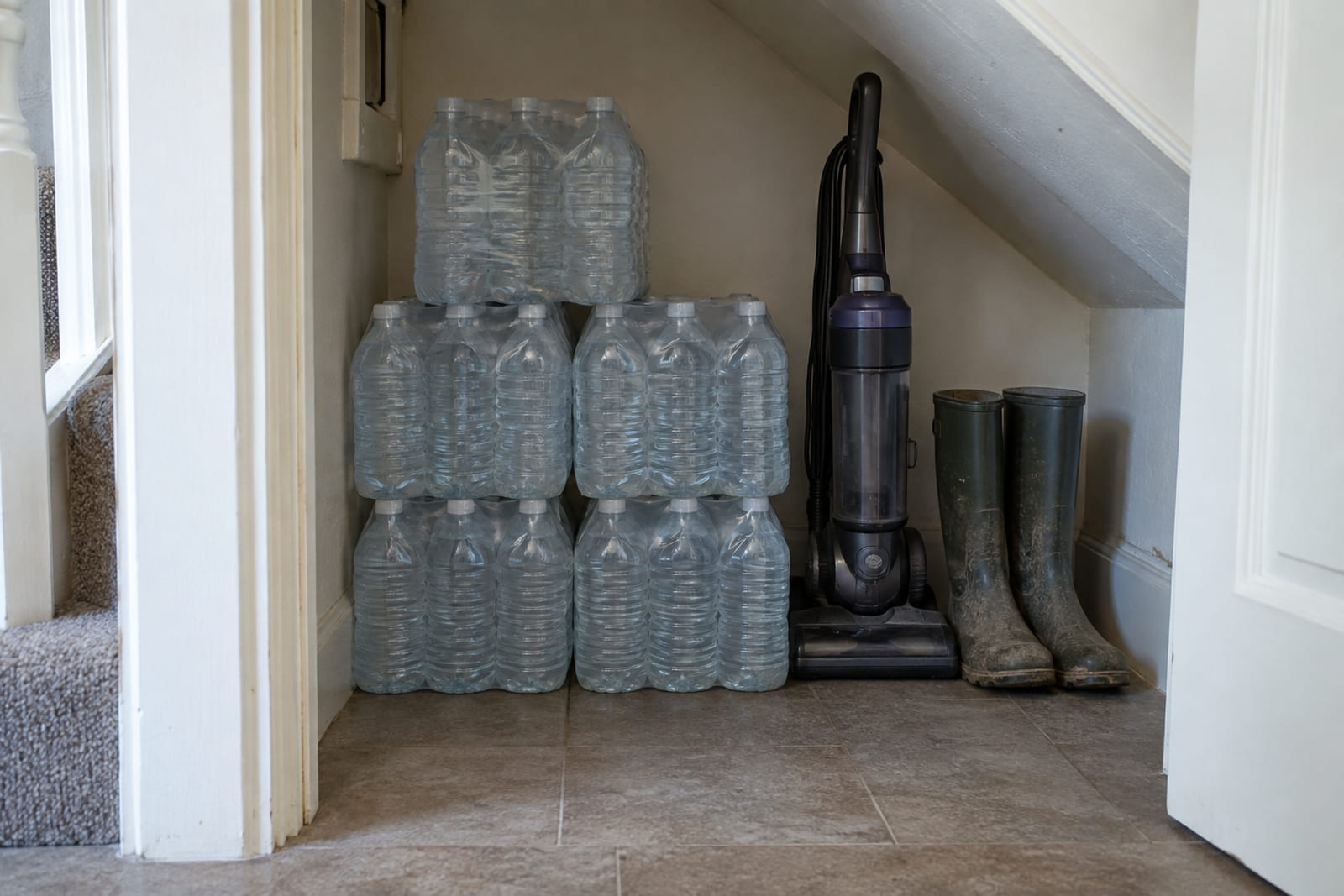
Three litres a person a day, for three days. That is the figure to work from, and for most households it is the single easiest thing on the checklist to sort in one shop.
What that comes to
Nine litres a person covers three days. The three litres is drinking and basic food preparation together, so it is not only what you drink.
| Household | Water for three days |
|---|---|
| One person | 9 litres |
| Two adults | 18 litres |
| Two adults, one child | 27 litres |
| Two adults, two children | 36 litres |
In bottles, twenty-seven litres is about five six-packs of the large bottles, or one supermarket trolley corner. It weighs around twenty-seven kilograms, which is the reason it belongs on a low shelf rather than in a loft.
4%
of UK survey respondents have three days’ worth of water for their household at this rate. 82% have less than a day, and 65% have at least a litre in. Most of the gap is a shelf away.
UK Government household preparedness survey, published 19 August 2026, 10,791 respondents.
Pets count too
A dog drinks roughly fifty millilitres per kilogram of body weight a day, so a medium dog adds a litre or so a day to the total. Cats need less. Add it to the household figure rather than assuming the spare bottles will cover it.
How long it keeps
Sealed bottled water has a best before date rather than a safety date, usually a year or two out, and it keeps longest somewhere cool, dark and away from anything strongly scented. Once a bottle is opened, treat it like any other opened drink.
Refilling your own containers from the tap is fine for washing water, but it is not the thing to rely on for drinking after several days. If you do keep tap water, label it with the date you filled it and change it every six months.
Where to keep it
Low, near a door, and split across two places if one cupboard cannot take the volume. A few smaller bottles in the grab bag matter more than the packs on the shelf, because those are the ones that leave the house with you.
Record the pack, the litres and the date, and the check becomes a reminder rather than a job you keep meaning to do.