An emergency kit is not a special purchase. For most UK households it is a shelf of ordinary things, chosen so that a power cut, a burst pipe, a storm or a few days without shops is an inconvenience rather than a crisis. This guide sets out the ten things worth sorting first, how much of each a household needs, and where to keep them.
Start with three days
UK Government preparedness guidance is built around being able to look after your household for a short period without outside help. Three days is the working figure. It is long enough to cover most interruptions and short enough that the shopping list stays reasonable. Everything below is sized against it.
Two numbers do most of the work. Three litres of drinking water a person a day, and two meals a person a day that need no cooking. For two adults and one child that is twenty-seven litres of water and eighteen ready-to-eat meals. Write those two figures down before you buy anything, because they are what tells you whether the cupboard you already have is enough.
The ten essentials
The full KITHELD checklist runs to twenty-four requirements across ten categories. These ten are the ones that make the most difference for the least effort, and most households already own some of them.
1. Drinking water
Bottled water in sealed multipacks, kept somewhere cool and dark. Nine litres a person covers three days. Sealed bottles keep for a long time, so put the date on the pack in your record and check it once a year rather than worrying about it.
2. Ready-to-eat food
Tinned beans, soup, fish, fruit, rice pudding, cereal bars, long life milk. The test is whether it can be eaten cold, straight from the tin, with no water added. Buy things the household actually likes, because that is what makes rotation easy.
3. A tin or bottle opener
A manual one, kept with the food rather than in the drawer with everything else. The cheapest item on the list and the one most likely to be missing when it matters.
4. A torch
Two if you can, so nobody is left in the dark while someone else checks the fuse box. A wind-up torch removes the battery question entirely. Candles are a poor substitute in a house with children or pets.
5. Spare batteries
In the sizes your torch and radio take, and only those sizes. Record which sizes you hold, because that is the detail nobody remembers in the shop.
6. A battery or wind-up radio
When mobile networks are busy or the power is off, radio is how official advice reaches you. A wind-up set with a phone charging socket does two jobs at once.
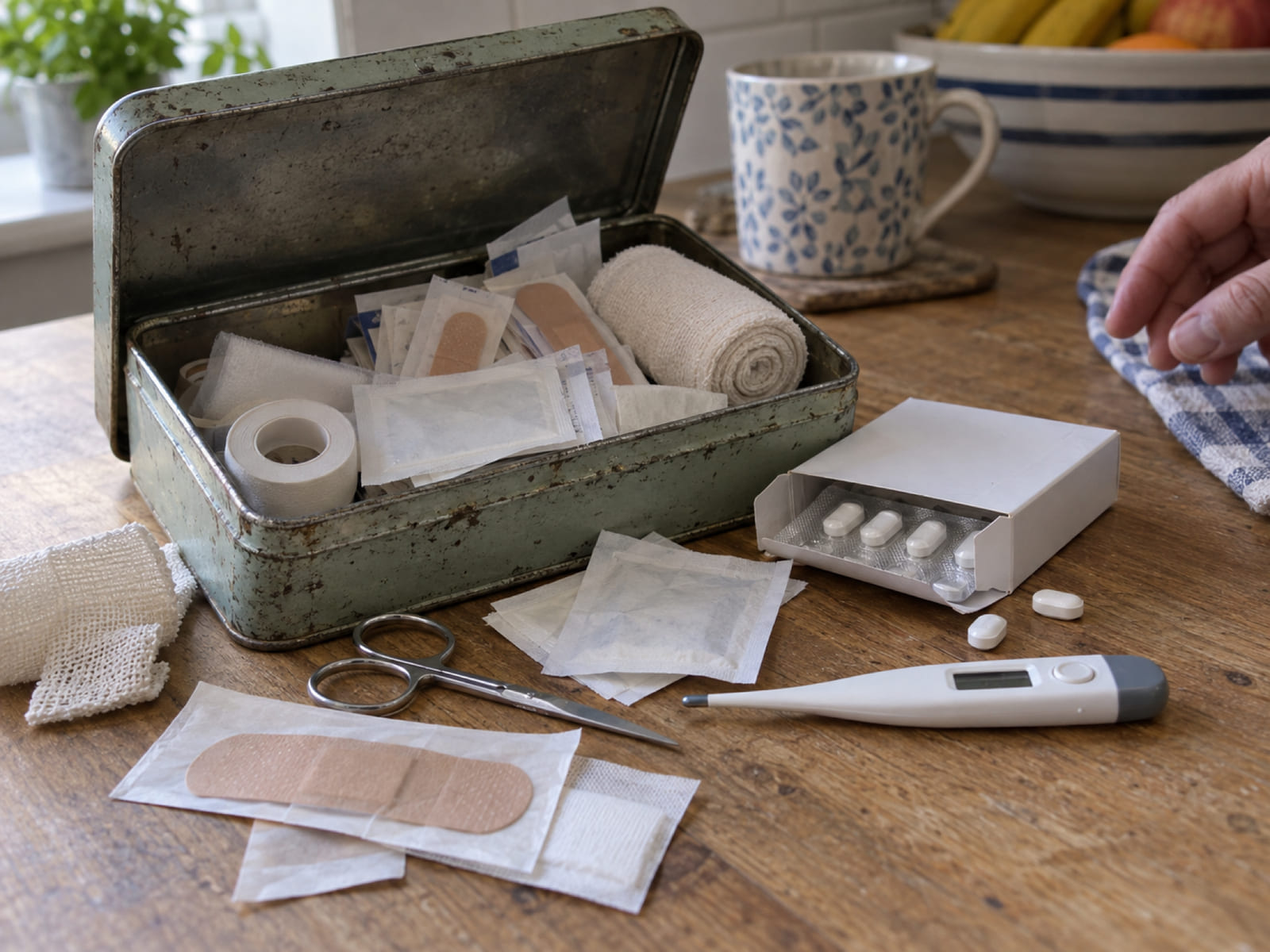
Most households already own one. The job is checking what is in it and writing down where it lives.
7. A first aid kit
Plasters, sterile dressings, tape, gloves, scissors and any painkillers the household uses. Box kits are fine. Put the expiry date into your record so the check happens on a date rather than a whim.
8. Regular medication
A few days spare of anything taken daily, and a spare inhaler if that applies to your household. Speak to your pharmacy about keeping a small buffer, and keep the prescription details with your documents.
9. Copies of important documents
Insurance policies, prescriptions, passports, bank details and a written list of useful phone numbers. Paper, in a folder, in a place someone else in the household knows about. Phones run out of charge.
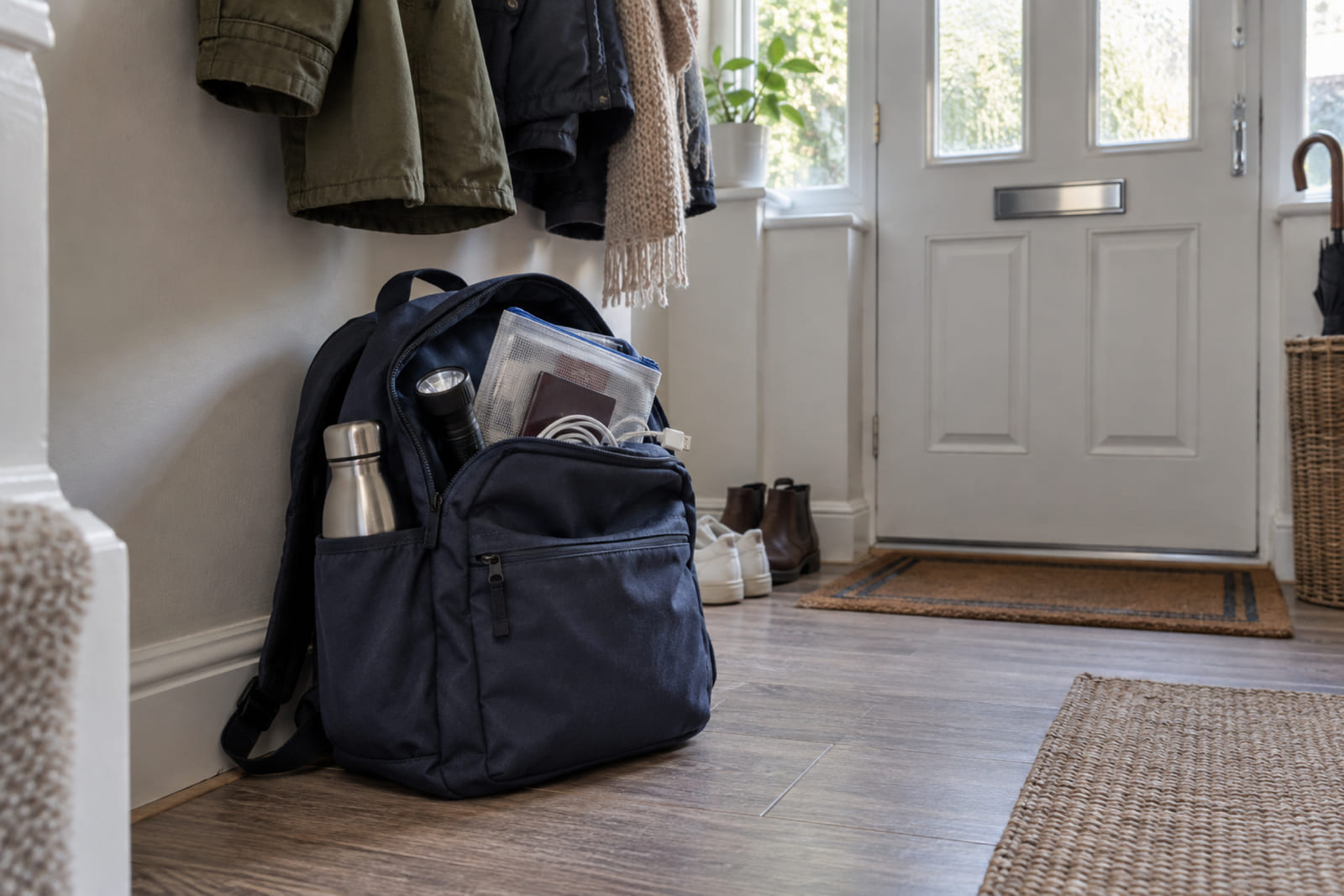
10. A grab bag
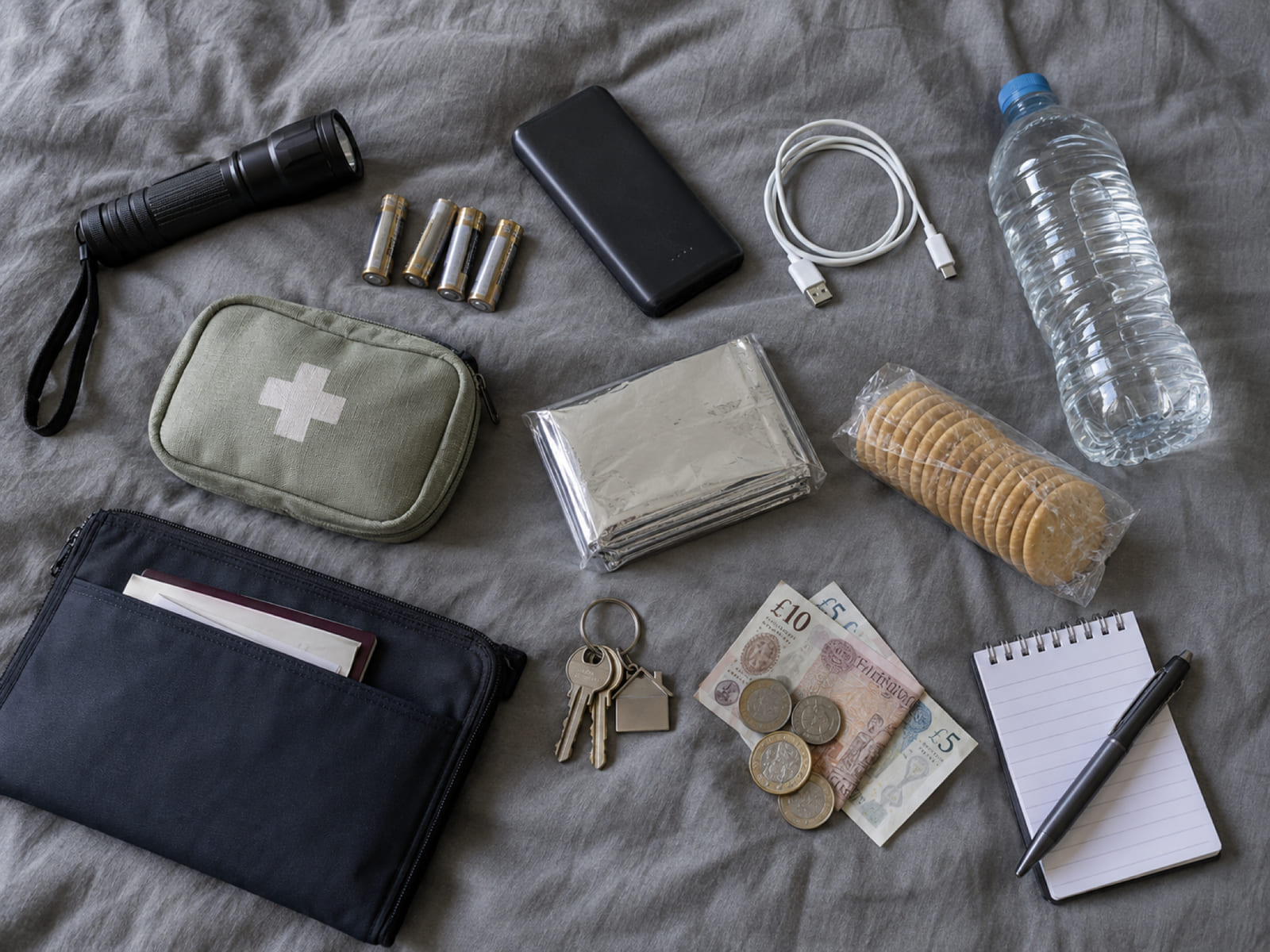
One bag by the door with the small things already in it: torch, chargers, document folder, a change of clothes, wipes, a foil blanket, some cash. The home store stays on the shelf. The bag is what leaves with you.
Where to keep it
Somewhere you can reach in the dark, without moving other things first. A hall cupboard beats a loft, and a loft beats a garage you have to cross the garden for. Water is heavy, so keep it low and near a door.
Splitting the kit across two or three places is fine, and often sensible. What matters is that every adult in the household knows which cupboard holds what. That is the part a written record fixes, and the part a printed checklist never does.
Then keep it current
A kit assembled once and forgotten is a kit of expired tins and flat batteries. Set one date a year to check dates, eat the food that is close to its date, and replace what you used. If you record expiry dates as you go, the reminder can come to you instead.
That is the whole habit. Buy once, write it down, check once a year.
For three people
Water
27 litres
Food
18 each
Batteries
8 each
Torches
2 each