
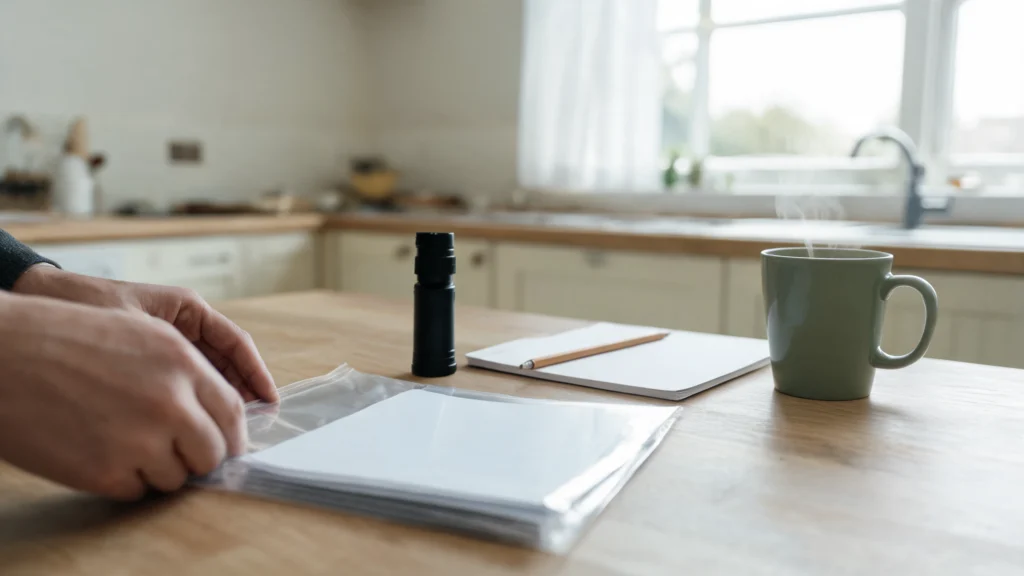
Three free jobs do most of the work of getting a home ready for flooding: check your flood risk, sign up for flood warnings and write a simple flood plan. Each takes minutes. With forecasters saying a wet, windy end to 2026 is more likely than usual, now is a good time to do them.
If you live in England, the government’s Flood Action site brings the three jobs in this guide together in one place: checking your long-term flood risk, signing up for free flood warnings and finding practical advice on making a plan. It launched on 12 October 2026 for Flood Action Week and covers England only, so if you live in Scotland, Wales or Northern Ireland, use the services listed below.
1. Check your flood risk
Long-term flood risk maps show the chance of flooding in an area. Use the one for where you live:
- England: GOV.UK’s long-term flood risk service covers rivers and the sea, surface water, reservoirs and, where data is available, groundwater. It describes risk for an area, not whether an individual property will flood.
- Scotland: SEPA lets you check an area’s long-term flood risk by postcode.
- Wales: Natural Resources Wales has a flood risk map.
- Northern Ireland: nidirect links to flood maps to check the risk in your area.
Look at surface water as well as rivers and the sea. GOV.UK says flash flooding can happen a long way from rivers, lakes and the sea, including in towns and cities. If you rent or have recently moved, check your current address rather than assuming.
2. Sign up for flood warnings
- England: the Environment Agency’s free service sends warnings by text, phone or email about flooding from rivers, the sea or groundwater, depending on your area.
- Wales: Natural Resources Wales runs a free service for flooding from rivers and the sea, and you can add more than one location, such as a relative’s house.
- Scotland: SEPA’s Floodline sends regional Flood Alerts and, where available, local Flood Warnings for the places you choose, including where family live.
- Northern Ireland: GOV.UK points to flood maps rather than a warning sign-up. nidirect suggests following local news, weather bulletins and Met Office warnings.
In England, Scotland and Wales you can also sign up by calling Floodline on 0345 988 1188, a 24-hour service. If someone you care for would struggle with warnings, GOV.UK says you can ask Floodline to send them to a friend or relative on their behalf. Wherever you live, Met Office weather warnings cover the whole UK.
Get KITHELD when it launches. It’s the app we’re building to record what your household has, where it’s kept and when it goes out of date.
We'll email you when KITHELD is available. In the meantime, our guide to storing water might be useful.
How much water to storeWarnings do not cover everything
This is the detail that is easy to miss. In England, GOV.UK says you cannot get flood warnings for surface water flooding, sometimes called flash flooding. Natural Resources Wales does not warn for surface water or small watercourses either, because that flooding is often very localised and quick. In Scotland, SEPA’s regional Flood Alerts can include surface water, but they cover wide areas.
So no warning does not always mean no risk. GOV.UK lists very heavy rain, often from thunderstorms, and severe weather warnings among the signs of flash flooding. Its safety advice is simple: do not walk or drive through flood water, move to higher ground or upstairs if it is safe, and call 999 if you are in immediate danger.
3. Make a flood plan
A flood plan is a short list you write now, before you need it. In England, the Environment Agency’s personal flood plan is a ready-made checklist. Wherever you live, it is worth noting:
- who could help you, and who you could help, such as neighbours or relatives;
- numbers for your insurer, council and energy and water companies;
- how to turn off your electricity, gas and water;
- whether your insurance covers flooding;
- how your household will contact each other, and where you would go, if you are separated (nidirect’s suggestion).
The plan also suggests keeping documents such as passports, insurance papers and medical cards in a waterproof container somewhere easy to reach, and having a flood kit with a torch, drinking water, medicine, warm waterproof clothing and phone chargers. You probably own most of that already, and our guide to what to put in an emergency kit goes through the basics. GOV.UK suggests keeping your flood plan with spare medication, important documents and contact details.
The government’s new Be Ready campaign also asks every household to write a simple emergency plan, including escape routes for fire or flooding and a meeting point.
Why now: the winter outlook
The Met Office’s three-month outlook, issued on 28 September 2026, gives double the normal chance of October to December being wet overall, and says windy weather is more likely than usual. It links this partly to an El Niño event in the tropical Pacific that it describes as unprecedented. In an earlier explainer, it notes that El Niño has historically been linked with wetter, stormier conditions in the UK in late autumn and early winter.
The same sources are clear about the limits. Seasonal outlooks cannot say when or where wet or stormy weather will happen, other outcomes remain possible, and the outlook expects drought pressures to persist in some areas. The Cabinet Office put it the same way on 2 October: a strong El Niño “could make wetter and stormier conditions more likely”. More likely is not certain, and it says nothing about your street.
Our UK emergency kit checklist covers the rest of the household, from children to pets. If the electricity goes off, our power cut guide explains what to do.
Sources checked 5 October 2026 (Flood Action sources 12 October 2026): Met Office: UK 3-month outlook, October to December 2026 (issued 28 September 2026); Met Office: What does the latest long-range forecast tell us? (11 September 2026); GOV.UK: Communities protected as government readies nation for winter weather (2 October 2026); GOV.UK: Flood Action; GOV.UK: New ‘one stop shop’ for flood preparedness launched (12 October 2026); GOV.UK: Prepare for flooding; GOV.UK: Get flood warnings; GOV.UK: Check long-term flood risk; GOV.UK: Flash flooding; Environment Agency: Personal flood plan; SEPA: Flooding; SEPA: Wetter autumn outlook puts Scotland’s flood risk in focus (1 October 2026); Natural Resources Wales: Sign up to receive flood warnings; nidirect: Preparing for a flood.
 What to do in a power cut, and what to have ready
 What to put in an emergency kit in the UK
 Where is my stopcock? How to find your stop tap and turn off water, gas and electricity