
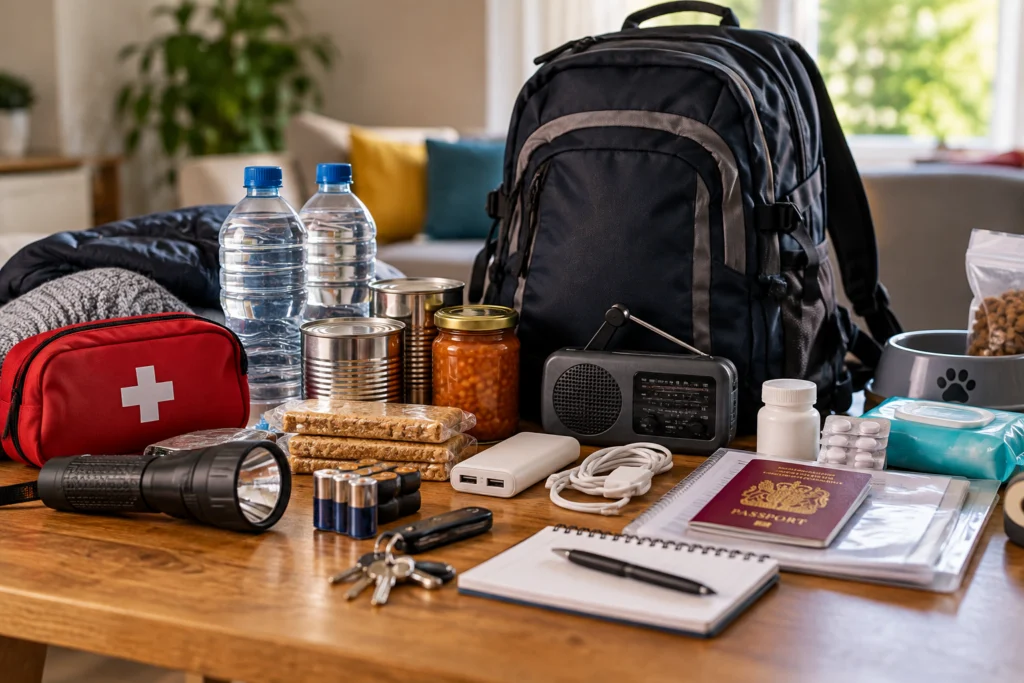
The government has launched Be Ready, a new campaign asking every household to be ready to manage for three days in an emergency. It isn’t asking anyone to panic-buy. The advice is to check what you already have, then add the rest a little at a time during your normal shopping.
The campaign launched on 22 October 2026. Its Be Ready website, run by the Cabinet Office, has a one-page checklist and a printable household plan. It covers emergencies such as severe weather and cyber attacks that can disrupt power, water or payments. In the government’s words, being ready for three days “helps you manage while support reaches those most in need”.
This is our summary of the official advice, not official guidance, and the Government has not endorsed KITHELD. In Scotland, see Ready Scotland, and in Northern Ireland, nidirect.
Get KITHELD when it launches. It’s the app we’re building to record what your household has, where it’s kept and when it goes out of date.
We'll email you when KITHELD is available. In the meantime, our guide to storing water might be useful.
How much water to storeWhat Be Ready asks you to do
The Be Ready guidance sets out five steps:
- Check what you already have at home.
- Note what your household still needs, including medical supplies, baby formula or pet food.
- Buy the missing items during your regular shopping, to spread the cost.
- Check your supplies every six months for expiry dates, and update them if your needs change.
- Talk to your neighbours about what support you could share, and swap contact details.
What’s on the checklist
The Be Ready checklist groups the supplies like this:
- Water: bottled water for three days, at 3 litres per person per day for drinking, plus extra for cooking and washing.
- Food: three days of non-perishable food that needs no fridge or cooking, such as tinned meat, fish or vegetables, dried fruit and nuts. The guidance suggests food you’d normally eat.
- Hygiene: hand sanitiser, wet wipes and bathroom products.
- Light and warmth: a torch with spare batteries, plus blankets, sleeping bags and warm clothing. Torches are safer than candles.
- Communication: a battery or wind-up FM radio, with your local news station frequencies written down, and a charged power bank.
- Money and documents: some cash in coins and notes as well as cards, copies of key documents, and a written list of important numbers and medication doses.
- Medical: a first aid kit and any essential medication and supplies.
- Babies: ready-to-feed formula, because powdered formula may not be safe to make up without boiling water, plus nappies and wipes.
- Pets: pet food and bottled water.
The cash is easy to overlook. If card machines or online banking stop working for a while, a few notes and coins at home mean you can still buy essentials.
The rest of the advice
Be Ready also asks households to fill in a household emergency plan: escape routes for fire or flooding, a meeting point, and key numbers on paper, including 105 for power cuts in England, Scotland and Wales (03457 643 643 in Northern Ireland). It suggests putting emergency contacts on your phone’s lock screen with ICE or Medical ID, after thinking about what’s visible to anyone holding the phone.
It points eligible households to the Priority Services Register, which tells energy and water companies you may need extra help during an outage. Households with children under five are among those who can join. Our Priority Services Register guide explains how to sign up.
Around the home, it suggests testing smoke alarms at least monthly, learning how to turn off your gas, electricity and water, and checking your insurance covers risks such as flooding.
Our guides for each step
If you want more detail on a step, these KITHELD guides cover it. They are our own guides, not part of Be Ready.
| Be Ready step | Our guide |
|---|---|
| Check what you already have | Start with what you already own: a ten-minute household check |
| Note what your household still needs | UK government emergency kit list |
| Buy the missing items a little at a time | What to put in an emergency kit in the UK |
| Check your supplies every six months | How much water to store per person |
| Talk to your neighbours | We don’t have a guide for this yet. See the Be Ready guidance. |
| Fill in a household emergency plan | ICE and Medical ID Teaching children the emergency basics Flood guide |
| Join the Priority Services Register | Priority Services Register guide |
| Test smoke alarms at least monthly | Smoke alarm beeping or chirping? |
A few suggestions from us
These are our own suggestions, not official guidance.
- Start with the cupboards. Most homes already have a torch, some tins and a first aid kit somewhere. Our ten-minute household check walks you through finding them.
- Work out the water for your household. Three days at 3 litres each is 9 litres per person for drinking alone. Our guide to how much water to store per person covers the extra for cooking, washing, babies and pets.
- Write down when you’ll next check. Six months from now is late April. Putting it in your phone’s calendar today means your tins and batteries get looked at before they go out of date.
- Keep it all in one place everyone at home knows about, so nobody is hunting for the torch in the dark.
- If you look out for an older relative or neighbour, the three-day checklist is a good thing to go through together.
For the full item-by-item list, with extra notes on medical needs and grab bags, see our UK government emergency kit list.
Sources checked 22 October 2026: Be Ready (Cabinet Office); Be Ready: be ready for emergencies; Be Ready checklist (PDF); Be Ready: about this website and UK resilience; Ready Scotland; nidirect: be ready for emergencies.
 Where is my stopcock? How to find your stop tap and turn off water, gas and electricity
 ICE and Medical ID: put emergency contacts on your phone’s lock screen