
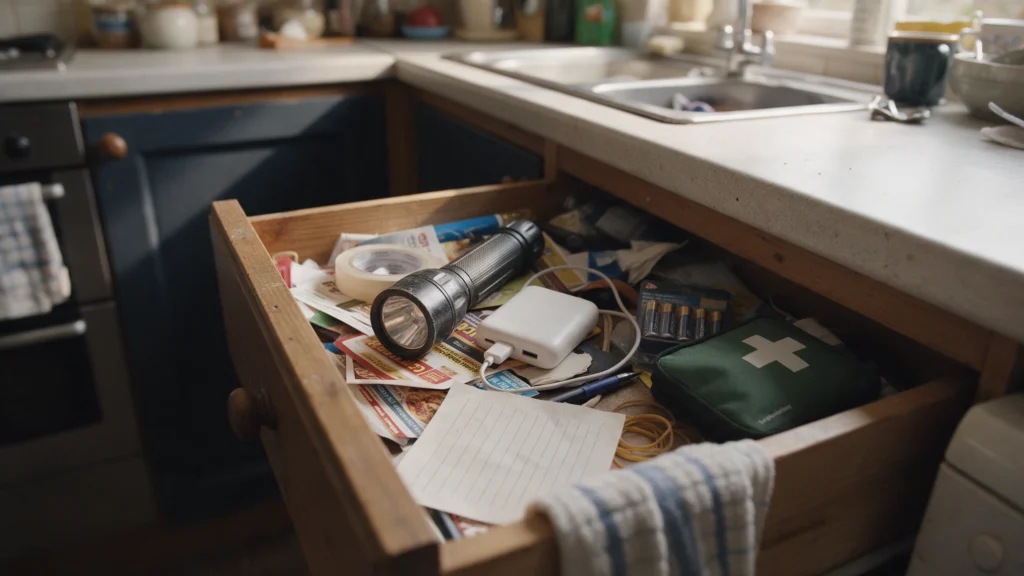
Preparedness lists can look like a big shop. Most homes already have more of the basics than they realise, scattered across drawers, cupboards and the car. A useful first step costs nothing: find what you already own, check it works, and make sure everyone at home knows where it is.
UK Government guidance makes the same point. The Be Ready website says many of its suggestions “won’t cost anything and just take a few minutes to do”, and that rather than buying everything at once, you can add to an emergency kit when you are able and build it up over time.
Why start here rather than with a shopping list
In the government’s 2026 public survey on preparedness (published 19 August 2026), half of respondents said they felt slightly or not at all prepared for an emergency. Among the things that had stopped people doing more:
- 29% said they did not have enough money;
- 25% did not want products to go out of date;
- 23% did not know enough about what actions they could take.
Starting with what you already own deals with all three. It costs nothing, it uses things you are already using and replacing, and it gives you a clear picture of what is actually missing before you buy anything.
Get KITHELD when it launches. It’s the app we’re building to record what your household has, where it’s kept and when it goes out of date.
We'll email you when KITHELD is available. In the meantime, our guide to storing water might be useful.
How much water to storeThe ten-minute check
Pick one place: the kitchen drawer everything ends up in, the cupboard under the stairs, or the hall shelf. Look for the items Be Ready suggests keeping at home, and check each one as you go.
- A torch. Switch it on. If it is dim or dead, note that it needs batteries. Be Ready advises a battery or wind-up torch, as torches are safer than candles.
- Spare batteries. Check they fit the torch and any radio you have.
- A power bank. If you own one, charge it now.
- A battery or wind-up radio. Be Ready notes there may be updates by radio during a power cut.
- A first aid kit. Open it. Plasters and creams get used and not replaced.
- Bottled water and tins. Check the dates, and whether you have a manual tin opener.
- Important numbers on paper. Be Ready suggests writing important phone numbers down and keeping them somewhere easy to find in a power cut.
Do not worry if you only find two or three of these. You are finding out what you have, and you can fill the gaps later.
Write down where things are
Knowing a torch exists is not much help if nobody can find it in the dark. Be Ready suggests keeping your paper notes with items such as a torch or radio, somewhere easy to find in the dark.
You do not need a special box. Agree that the torch lives on the hall shelf and the power bank lives in the kitchen drawer, then tell everyone at home, including anyone who visits to help.
Be Ready’s power cut guidance also suggests avoiding your phone’s torch during a power cut, so the battery lasts for calls and updates, which is another reason to know where a proper torch is. Our power cut guide covers what else to have ready.
Then choose one next step
Once you have looked, the gaps are usually obvious. Pick one, not ten:
- batteries for a torch that does not work;
- a sheet of paper with family numbers and the power-cut number: 105 in England, Scotland and Wales, or 03457 643643 in Northern Ireland;
- a manual tin opener next to the tins;
- replacing whatever has run out in the first aid kit.
Next month, do the same check in another cupboard, at the same time as the monthly smoke alarm test. Small, regular checks are easier to keep up than one big effort, and they catch batteries that have gone flat.
Your household will need different things depending on who lives there. Babies, pets, medication and medical equipment all change the list. Our UK emergency kit checklist covers these in more detail, and our guide to what to put in an emergency kit goes through the basics.
Updated 27 October 2026 for the government’s new Be Ready advice.
Sources checked 3 October 2026: Be Ready: be ready for emergencies; Be Ready: power cuts; UK public survey of risk perception, resilience and preparedness 2026.
 What to put in an emergency kit in the UK
 UK government emergency kit list: what Be Ready suggests keeping at home
 What to do in a power cut, and what to have ready
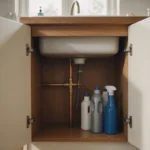 Where is my stopcock? How to find your stop tap and turn off water, gas and electricity