
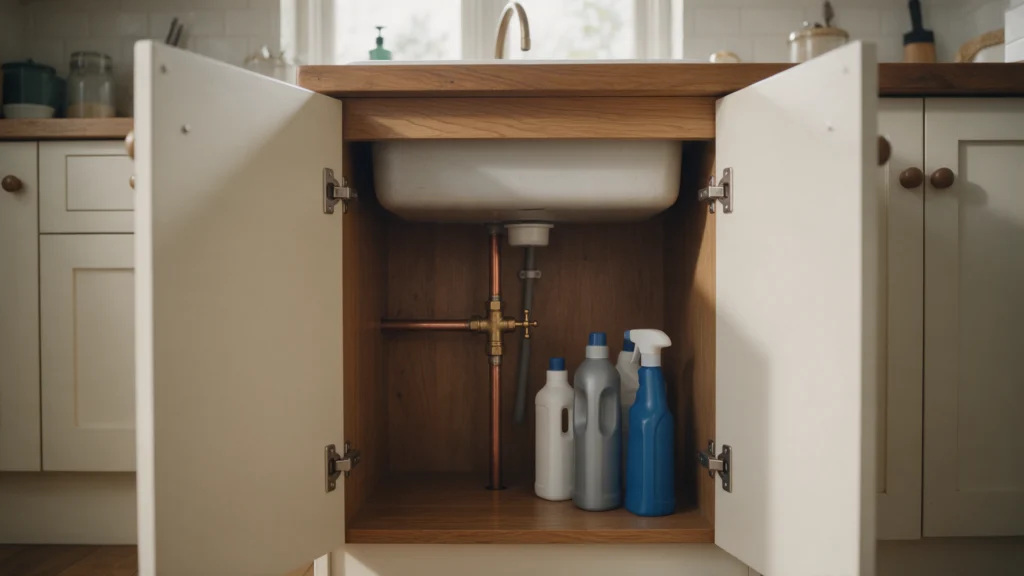
If a pipe burst tonight, would you know where your stopcock is? Most of us rarely touch the stop tap, the gas valve or the main electricity switch, so it is easy to forget where they are, or never to have found them at all. Looking for them on an ordinary day is a lot easier than looking with water coming through the ceiling.
The government’s Be Ready website suggests knowing how to turn off your gas, electricity and water, since you will need to turn them off if you have to leave home because of flooding, or if there is a leak. Its flooding advice says they are in different places in different homes, and gives a rough idea of where to look.
Where is my stopcock? Finding the stop tap
The stop tap, often called the stopcock, controls the water coming into your home. Be Ready says you will usually find it inside, where your water supply comes in. The Consumer Council for Water’s winter advice says it is usually under the kitchen sink, though it could be somewhere else in the house. Wessex Water lists the other usual places: under the stairs, in the airing cupboard or a kitchen cupboard, or in the bathroom, garage, cellar or utility room.
To turn the water off, turn the stop tap clockwise. Wessex Water says it can take a couple of minutes for the water to stop completely, and that turning it anticlockwise turns it back on. Inside stop taps are used so rarely that it suggests checking now and then that yours still works. If it is damaged or broken, call a qualified plumber.
There is usually a second stop tap outside, under a cover near your property’s boundary, often in the pavement or verge. The WaterSafe Register says this one belongs to your water supplier, should ideally only be used by a plumber or the supplier, and may need the supplier’s permission even in an emergency. In some older terraced houses one outside stop tap controls the water to several homes. If the inside one will not turn, ring a plumber or your water company.
If a pipe freezes or bursts
The Consumer Council for Water’s advice for a frozen pipe starts at the stop tap: turn the water off there, and switch off the central heating and any immersion heater. Leave the cold tap on so thawed water can escape, and warm the pipe slowly with a hairdryer on a warm setting, a hot water bottle or a heated cloth. Never use a naked flame or a blowtorch. Call a registered plumber before the pipe bursts.
If a pipe does burst, turn the water off at the stop tap if you have not already, and make sure the boiler or immersion heater is off. Turn on all the taps to reduce the risk of flooding, and soak up what you can with towels. Turn the taps off again before you turn the stop tap back on. A burst pipe needs a professional plumber, and it is worth taking photos or a video of the damage for your insurer.
Gas: the emergency control valve
Be Ready says your gas shut-off valve is next to your gas meter. According to the gas network company Cadent, the meter could be in the garage, under the stairs, in the kitchen, or in a box on an outside wall at the front, side or back of the house. You may need a key to open the meter box.
The valve is a handle on the pipe by the meter. When the handle lines up with the pipe, the gas is on. To turn it off, give the handle a quarter turn, either way, so that it sits at a right angle to the pipe. Cadent says not to turn it back on until you have been told it is safe.
If you smell gas
The Gas Safe Register says to open all the doors and windows to get fresh air in, and to turn off the gas at the emergency control valve by the meter, unless the meter is in a basement or cellar. Put out any naked flames, don’t smoke, and don’t use electrical switches, including light switches, because they can ignite escaping gas. Then call the National Gas Emergency Service on 0800 111 999, the number for England, Scotland and Wales. The Health and Safety Executive gives the same number, and the gas network company SGN says the line is free and open 24 hours a day.
In Northern Ireland, nidirect gives the same first steps: turn off the gas at the meter, open the windows and doors, and do not turn any electrical equipment on or off. The number there is the Northern Ireland Gas Emergency Service on 0800 002 001.
Electricity: the main switch
Be Ready says the mains electricity cut-off is on your fuse board, and that it is a big on and off switch. If your area has a flood warning, its advice is to turn off your gas, electricity and water if it is safe to do so, and not to touch an electrical switch if you are standing in water. If the electricity goes off by itself in a power cut, our power cut guide covers what to do and what to have ready.
A few suggestions from us
These four are our own suggestions. You won’t find them in the official guidance.
- Show everyone else at home where the stop tap, gas meter and fuse board are. The person who knows might be out when a pipe goes.
- If the stop tap is stiff, don’t force it. Ask a plumber to look at it.
- Write down where all three are on the paper list of phone numbers that Be Ready suggests keeping, or on its printable household emergency plan.
- Keep a torch near the fuse board, because you may well be looking for it in the dark. Our guide to what to put in an emergency kit covers the torch and the rest of the basics.
One thing to do today
Find your stop tap. Make sure you can get to it without emptying the whole cupboard, then check it still works. We would turn it clockwise until the kitchen cold tap stops running, then turn it back on. The gas meter and the fuse board can wait for another day. Our ten-minute household check works through the rest of the house in the same way, and our flood guide shows where turning off your supplies fits into a flood plan.
Sources checked 12 October 2026, Gas Safe Register added 17 October 2026, Be Ready links updated 27 October 2026: Be Ready: be ready for emergencies; Gas Safe Register: what to do in a gas emergency; Be Ready: flooding; Consumer Council for Water: winter advice; Wessex Water: how to find your stop taps; WaterSafe: what should I do if I can’t turn off my water supply?; Cadent: your home emergency guide; HSE: domestic gas FAQs; SGN: what to do if you smell gas; nidirect: energy, power supply and utilities.
 ICE and Medical ID: put emergency contacts on your phone’s lock screen
 The Priority Services Register: who can join, and how to sign up before winter
 How to make a flood plan: check your flood risk and sign up for warnings